During Upwaas Food is very less or not there in the stomach. But digestive juices are present in the stomach. This force digestive juices to digest some cells present in the body. So, they kill domewhat the cancer cells present in our body.
Research found that Fasting also helped to reduce the risk of heart diseases and obesity.
Hindi Name: Tulsi Sanskrit Name: Tulasi English Name: Holy Basil Latin Name: Ocimum sactum Linn Pennel An annual delicate herb cultivated extensively in tropical climate of the country. It is also planted in kitchen garden and as an indoor plant since it is kept sacred in Hindu philosophy. Medicinally the leaves are used for various kind of classical and home made preparations.
Tulsi Medicinal Uses & Benefits Indian mythology attaches a great significance to Basil by recognizing it as a holy herb. Perhaps, such significance comes from the actual health applications of the herb. Its use is recommended as a first aid in the treatment of respiratory, digestive and skin diseases. Apart from these common ailments, Ayurveda also recognizes its use for the diseases ranging up to tumerous growths. Experimental studies identify it to be a highly promising immunomodulator, cytoprotective and anticancer agent.
Following are the benefits & uses of Tulsi plant or Holy Basil/Ocimum Sanctum.
Promotes Healthy Heart Holy basil contains vitamin C and antioxidants such as eugenol, which protects the heart from the harmful effects of free radicals. Eugenol also proves useful in reducing cholesterol levels in the blood. Anti-aging Vitamin C and A, phytonutrients, in Holy Basil are great antioxidants and protect the skin from almost all the damages caused by free radicals. Treats Kidney Stones Tulsi acts a mild diuretic & detoxifying agent which helps in lowering the uric acid levels in the body. Acetic acid present in holy basil helps in the breakdown of the stones. Relieves Headaches Tulsi is a natural headache reliever which can also relieve migraine pain. Fights Acne Holy basil helps kill bacteria and infections. The primary active compound of holy basil oil is eugenol which helps fight skin related disorders. Ocimum Sanctum helps treat skin infections both internally and externally. Relives Fever Tulsi is an age-old ingredient for treating fever. It is one of the prime ingredients in the formulation of various ayurvedic medicines & home remedies. Eye Health Tulsi’s anti-inflammatory properties help promote eye health by preventing viral, bacterial and fungal infections. It also soothes eye inflammation and reduces stress. Oral Health Tulsi is a natural mouth freshener and an oral disinfectant. Ocimum Sanctum can also cure mouth ulcers. Holy basil destroys the bacteria that are responsible for dental cavities, plaque, tartar, and bad breath, while also protecting the teeth. Cures Respiratory Disorders Due to the presence of compounds like camphene, eugenol, and cineole, tulsi cures viral, bacterial, and fungal infections of the respiratory system. It can cure various respiratory disorders like bronchitis & tuberculosis. Rich Source of Vitamin K Vitamin K is an essential fat-soluble vitamin that plays an important role in bone health and heart health.
Chemical Composition Aerial portion of the plant yields an essential oil possessing eugenol as the major constituent. Other compounds identified were nerol, eugenol, terpinene pinene and carvacrol. The leaves have also been reported to contain ursolic acid, apigenin, luteolin and orientin.
Science behind some of the Ancient Indian Traditions and Cultures :-
1. Joining hands in Namaskar ensures joining fingertips. This activates pressure points relating to eyes, ears, and mind, which enables us to remember a person for long. Also, it saves us from transfer of germs.
2. The cooling effect of sandalwood relieves a headache as the area between the eyebrows is considered a converging point of nerves. It is also considered as the position of the third eye, which is a source of all energies. Applying sandalwood keeps this area relaxed. There is a small spot between the two eyebrows on the forehead; this spot is considered a major nerve point in our body. The red Tika or Tilak is considered as energy-saver; applying kumkum between the eyebrows is believed to keep energy in the body and control different levels of concentration. When we apply kumkum in the middle of the forehead, we automatically press Adnya-chakra; this energises the blood supply to our facial muscles.
Applying Tilak / Kumkum on the Forehead
3. Why We Start With Spice and End With Sweet?
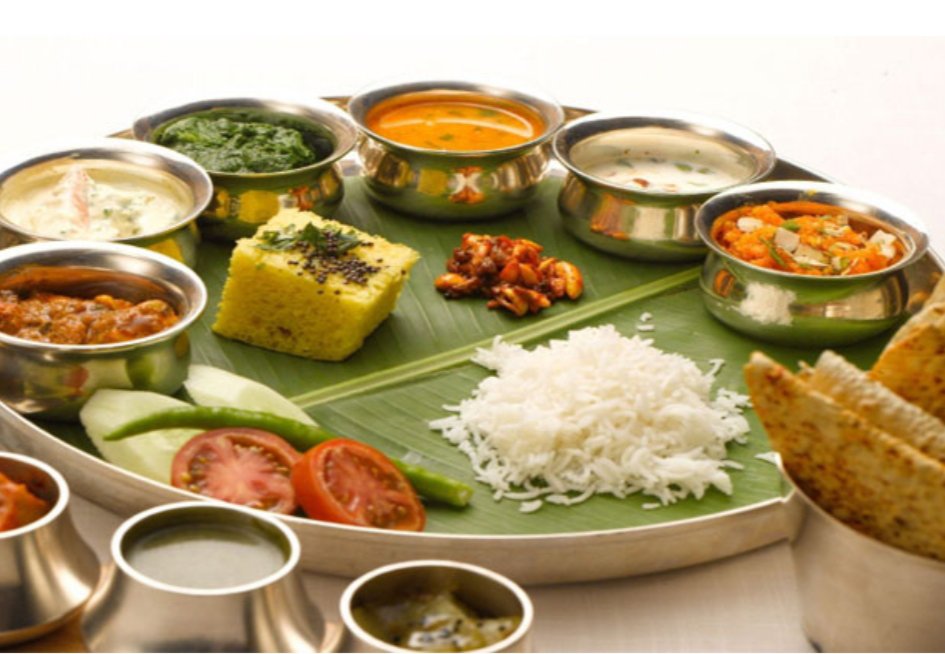
Our meals start off with spice and end with some sweet. According to science, spice activates the digestive juices and acids to boost our digestive system efficiently; sweets contain carbohydrates that bring down the digestive process. Therefore, sweets are always served at the end of meals.
4. Why You Should Not Sleep With Your Head Towards North?
Our body includes magnetic field and Earth is a giant magnet. When we sleep by keeping our head towards north, body’s magnetic field gets completely uneven to the Earth’s Magnetic field. That creates problems connected to blood pressure and our heart requires working harder to beat this irregularity of Magnetic fields. Another reason is that human body has a great deal of iron in our blood. When we sleep by keeping our head towards North, iron from the whole body starts to assemble in the brain. This can create a headache, Alzheimer’s Disease, Cognitive Decline, Parkinson disease and brain degeneration.
5. Surya Namaskar
Hindus worship all natural phenomena; the sun is worshipped as the god of energy. Hindus chant prayers to Sun by offering water; during this practice, we look at the Sun rays through the water. This is good for eyes as it improves vision. Moreover, we tend to get up early in the morning and complete all morning rituals in the morning. Making the most of the sunlight is also the reason behind this tradition.
There are many more such traditions and cultures. They are uploaded on different




 SVK
SVK 